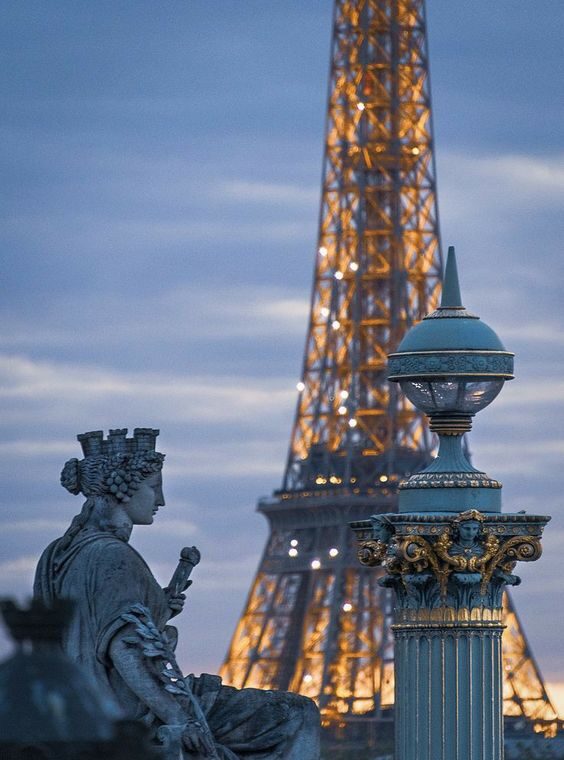
Discover the Eiffel Tower on a journey to the clouds like none other in the world. Eiffel Tower,wrought-iron structure in Paris that is among the most famous landmarks in the world. which was built on (1887–89) by Gustave Eiffel and named in his honor. Eiffel Tower was built to celebrate the centenary of the french revolution. And it was opened to the public on May 15, 1889. The tower features a museum, several restaurants,like.Jules verne etc… Whether day or night The Eiffel Tower is open every day of the year from 9:30 AM to 10:45 PM. Weekends and holidays are the busiest days.. At nightfall, it lights up and sparks every hour until closing time till. It consists of 3 floors, first floor, the second floor, and the top. You can reach the top by (elavator/stairs).
The Arc de Triomphe in Paris is a massive triumphal arch commissioned by Napoleon I in 1806 to celebrate the French armies’ military achievements, particularly the Battle of Austerlitz. Designed by architect Jean-François-Thérèse Chalgrin. The arch stands at the western end of the Champs-Élysées, honoring those who fought and died for France in the French Revolutionary and Napoleonic Wars. Beneath its vault lies the Tomb of the Unknown Soldier from World War I. Its iconic design of the ront pont which connects 12 roads indicating 12 directions and named after The Marshal’s and historical significance make it one of the world’s best-known monuments.
Opera has a rich history with many iconic works that continue to captivate audiences. With more than 350 years of history, the Paris Opera is renowned for its qualitative and wide programming, both at the Palais Garnier and the Bastille Opera House, but also for the unique architecture of its two theaters open to visitors during the day. With more than 400 curtain raises per year, the Paris Opera offers rich ballet, opera, and concert programs, as well as programming specially made for a younger audience. Greeting new audiences remains at the heart of the Paris Opera’s mission. To do so, the institution is always developing new projects to share and better communicate the taste and discovery of opera and dance.
Place de la Concorde, also known as “Place Louis XV,” holds a dark historical significance. During the French Revolution, it became the site of public executions, particularly during the Reign of Terror. The square witnessed the execution of Marie Antoinette, the queen consort of Louis XVI, on October 16, 1793. A symbol of revolutionary justice. Over 1,300 people were executed at Place de la Concorde during this wild period. The guillotine, initially presented as a humane machine, transformed into a government tool during the Terror. Nearly 38,000 to 43,000 guillotined individuals during the revolutionary era. Now it has became a touristic site for the public.
The Grande Arche de la Défense,is a monumental building located in the west of Paris. It is also called the business district because it contains number of great companies and hotels it was completed in 1989. It is about 110-meter-high made of prestressed concrete and covered in Bethel Granite. Originally named La Grande Arche.
The Panthéon, originally known as the Church of Sainte-Geneviève, was designed by architect Jacques-Germain Soufflot and construction began around 1757. The Pantheon is a must-see when you visit Paris, both because of the imposing architecture and, finally, with respect to the people that made France and the world a better place. Its massive concrete dome, the largest unreinforced dome in the world, remains a mystery for architects and engineers even today. It replaced an older church on the same site. During the French Revolution, it was secularized and dedicated to the memory of great French figures, earning its name “Panthéon”.
Place Vendôme was built on the orders of Louis XIV, is a square in the heart of Paris. Its architecture, designed by Jules Hardouin-Mansart in 1699 created to celebrate the military victories of Louis XIV, it quickly became a symbol of luxury and power. The central Vendôme Column, erected by Napoleon I to commemorate the Battle of Austerlitz, remains a prominent feature on the square. Today, it stands as one of Paris’s most famous and luxurious squares, closely associated with high-end jewelry and fashion. The world’s great jewelry brands have turned Place Vendôme and the adjoining Rue de la Paix into one continuous stream of window displays filled with sparkling diamonds, rubies, and emeralds.
The Père Lachaise cemetery takes its name from King Louis XIV’s confessor, Father François d’Aix de La Chaise. It is the most prestigious and most visited in Paris. Situated in the 20th arrondissement of Paris. It serves as the final resting place for numerous notable individuals like Oscar Wild, Richard Wright, Colonel Fabien etc.
The Luxemberg garden was created in 1612 by Queen Marie de Médicis, who purchased the Hôtel du Luxembourg and its land to build a royal residence there The garden, inspired by the Boboli Gardens in Florence, has undergone numerous transformations over the centuries. Its current layout was established during the Second Empire. The gardens feature prominently in Victor Hugo’s novel Les Misérables. , it spans approximately 23 hectares and features French and English gardens, an orangery, a large octagonal basin, statues, greenhouses, beehives, and an orchard trees and gardens galore, but there are also sports opportunities, statues, a pond to rent mini boats for the kids, and a palace that sits next to the garden.
The Jardin des Tuileries,which was built in 1564 by Queen Catherine de Medici is a Parisian enclosed park. Extension of the Louvre museum. The famous gardener of the king, André Le Nôtre, gave it its current appearance as a French garden in 1664. The Musée national de l’Orangerie (officially “public establishment of the Musée d’Orsay and the Musée de l’Orangerie – Valéry-Giscard d’Estaing ” since 2021) is a French museum of impressionist and post-impressionist paintings , located in the Jardin des Tuileries , at the western end of the Terrasse du bord de la Seine , place de la Concorde , in Paris.
Positioned along the Garonne River, the Place de la Bourse is one of Bordeaux’s most iconic landmarks. This grand square, built in the 18th century, exemplifies the city’s classical architecture and is a UNESCO World Heritage site. Visitors are drawn to its stunning symmetry, the elegant facades of the surrounding buildings, and the enchanting “Miroir d’Eau” (Water Mirror) in front. The reflecting pool creates beautiful mirror-like reflections of the square, making it a favorite spot for photography and leisurely strolls. The Place de la Bourse is a testament to Bordeaux’s rich architectural heritage and is a must-see for any visitor.
The Grosse Cloche, located on Rue Saint-James, is one of the oldest belfries in France and a significant historical monument in Bordeaux. Dating back to the 15th century, this medieval gate once served as a part of the city’s fortifications. Visitors can marvel at its impressive architecture, the large bell that chimes on special occasions, and the charming clock tower. The Grosse Cloche offers a glimpse into Bordeaux’s medieval past and is a fascinating stop for history buffs and those interested in ancient architecture.
Situated beneath the town, the catacombs of Saint-Émilion are an extensive network of underground galleries and quarries. Originally used for limestone extraction, these tunnels were later repurposed as a place of worship and burial. Visitors can take guided tours to explore the catacombs, including the impressive underground church, chapels, and tombs. The catacombs offer a fascinating glimpse into the town’s religious and historical heritage, making it a unique and intriguing destination.
Mont Saint-Michel is a stunning island commune located approximately 100 kilometers southwest of Caen. It is one of France’s most iconic landmarks, renowned for its breathtaking medieval architecture and unique location on a rocky outcrop surrounded by tidal waters. Visitors to Mont Saint-Michel can explore the winding streets and alleys of the village, visit the impressive abbey that crowns the island, and enjoy panoramic views of the surrounding bay. The experience is like stepping back in time, with the abbey’s Gothic spires and the quaint, historic buildings creating a magical atmosphere. The island is accessible by a causeway, and its tidal nature adds to the charm, making it a must-visit destination for history enthusiasts, architecture lovers, and those seeking a truly unique and picturesque setting.
A historic castle built by William the Conqueror, stands as a majestic landmark in Caen. This fortress offers a glimpse into medieval architecture and history, with its massive stone walls, towers, and dungeons. Visitors can explore the castle grounds, museums within, and enjoy panoramic views of the city from its ramparts, making it a fascinating site for history buffs and tourists alike.
A prominent Gothic-style church in Caen, is renowned for its stunning architecture and historical significance. Located near the Château de Caen, this church features intricate stained glass windows, a beautiful nave, and an impressive tower. It serves as a key religious site and a testament to the city’s rich architectural heritage, drawing visitors for both worship and architectural admiration.
La Croisette is Cannes’ most famous boulevard, stretching along the Mediterranean coast. Lined with luxury hotels, boutiques, and restaurants, it is a symbol of the city’s glamour and elegance. Visitors can stroll along the palm tree-lined promenade, enjoy the views of the beach and the sea, and experience the lively atmosphere, especially during the Cannes Film Festival. La Croisette is an essential part of any visit to Cannes, embodying the city’s luxurious lifestyle.
Located at the end of La Croisette, the Palais des Festivals et des Congrès is the iconic venue for the Cannes Film Festival. This modern building hosts numerous events and conventions throughout the year. Visitors can walk the famous red carpet, see the handprints of movie stars in the “Chemin des Étoiles” (Path of Stars), and take a guided tour of the venue. The Palais des Festivals is a symbol of Cannes’ international cultural significance and a must-see for film enthusiasts.
This historic villa, located in the center of Grasse, is the former home of the renowned painter Jean-Honoré Fragonard. The villa has been converted into a museum, showcasing the artist’s life and works. Visitors can explore the beautifully decorated rooms, the artist’s studio, and the lush gardens. The villa offers a glimpse into the life of one of France’s most celebrated Rococo painters, making it an important cultural landmark.
The Cité de Carcassonne is a UNESCO World Heritage site and one of the most well-preserved medieval fortresses in Europe. Located on a hill overlooking the Aude River, the Cité features double-walled fortifications, 52 towers, and a labyrinth of narrow streets. Visitors can explore the Château Comtal (Count’s Castle), walk along the ramparts, and visit the various museums and shops within the walls. The Cité offers a captivating journey back in time, providing insights into the military and social history of medieval France.
The Pont Vieux (Old Bridge) connects the medieval Cité with the lower town (Ville Basse) across the Aude River. Dating back to the 14th century, this stone bridge offers picturesque views of the Cité and the surrounding landscape. Visitors can enjoy a leisurely walk across the bridge, take in the historic architecture, and capture stunning photographs of Carcassonne. The Pont Vieux is a charming and historically significant landmark that adds to the city’s medieval ambiance.
Perched on the Fourvière Hill, the Basilica of Notre-Dame de Fourvière offers panoramic views of Lyon and is one of the city’s most iconic landmarks. Built in the late 19th century, the basilica features stunning Byzantine and Romanesque architecture, intricate mosaics, and beautiful stained glass windows. Visitors can explore the basilica’s ornate interior, visit the museum of sacred art, and climb the tower for breathtaking place in Lyon. The basilica is a spiritual and architectural treasure that attracts both pilgrims and tourists.
Located near the Basilica on Fourvière Hill, the Ancient Theatre of Fourvière is a Roman amphitheater dating back to 15 BC. It is part of the larger archaeological site of Lugdunum, which also includes a museum. Visitors can walk through the well-preserved ruins, imagine the ancient performances that took place here, and enjoy the panoramic views over the city. During the summer, the theater hosts the Nuits de Fourvière festival, featuring music, dance, and theater performances, blending ancient history with contemporary culture.
The Place de la Comédie is the central square of Montpellier and a bustling hub of activity. Located at the heart of the city, it is surrounded by beautiful buildings, including the Opéra Comédie and the Trois Grâces fountain. Visitors can enjoy the lively atmosphere, relax at one of the many cafes, and watch street performers. The square is a perfect starting point for exploring Montpellier’s historic center and its vibrant cultural life.
Situated at the western end of Rue Foch, the Arc de Triomphe is a grand monument built in the late 17th century to honor Louis XIV. Nearby, the Promenade du Peyrou offers a beautiful park with stunning views of the city and the surrounding countryside. Visitors can walk through the park, admire the equestrian statue of Louis XIV, and see the impressive Château d’Eau (Water Castle). This area is ideal for history enthusiasts and those looking to enjoy a scenic and leisurely stroll.
Stretching along the Mediterranean coast, the Promenade des Anglais is one of Nice’s most iconic landmarks. This bustling promenade offers stunning sea views, beautiful palm trees, and numerous cafes and restaurants. Visitors can take a leisurely stroll, rent a bike, or simply relax on one of the many benches. The Promenade des Anglais is perfect for enjoying the vibrant atmosphere of Nice and soaking up the sun.
Castle Hill is a historic site and park located between the port and the old town of Nice. It offers panoramic views of the city, the Baie des Anges, and the surrounding coastline. Visitors can explore the ruins of the old castle, beautiful gardens, and the impressive waterfall. The hill is accessible by foot, elevator, or the Petit Train tourist train. It’s an ideal spot for photography, picnicking, and enjoying nature.
The Reims Cathedral, located in the city center, is a masterpiece of Gothic architecture and a UNESCO World Heritage site. It is famous for its stunning facade, intricate stained glass windows, and the significant role it played in the coronation of French kings. Visitors can marvel at the grandiose architecture, explore the nave, and learn about the cathedral’s history through guided tours. The cathedral is a symbol of Reims’ rich history and architectural heritage, making it a must-visit monument.
Situated in the northern part of Reims, the Porte de Mars is a remarkable ancient Roman triumphal arch dating back to the 3rd century AD. It is one of the largest surviving Roman arches in the world and features intricate carvings and reliefs. Visitors can admire the detailed stonework and gain insights into Reims’ Roman past. The arch is an impressive testament to the city’s long history and offers a fascinating glimpse into its ancient heritage.
The Strasbourg Cathedral, located in the city center, is a masterpiece of Gothic architecture and one of the tallest medieval buildings in Europe. The cathedral is renowned for its stunning facade, intricate sculptures, and beautiful stained glass windows. Visitors can climb the tower for breathtaking views of the city and the Rhine River, explore the Astronomical Clock, and marvel at the grandeur of the nave and choir. The Strasbourg Cathedral is a spiritual and architectural landmark that is not to be missed.
Petite France is a picturesque historic district located on the Grande Île (Large Island), a UNESCO World Heritage site. This charming area is known for its well-preserved half-timbered houses, cobblestone streets, and scenic canals. Visitors can wander through the narrow lanes, enjoy the views from the Ponts Couverts (Covered Bridges), and dine at the many restaurants and cafes along the water. Petite France offers a quintessential Alsatian experience, blending history, architecture, and a vibrant atmosphere.
The Capitole de Toulouse, located in the city center on Place du Capitole, serves as the city hall and a cultural landmark. The impressive Neoclassical façade and the grand square in front make it a central feature of Toulouse. Visitors can tour the ornate ceremonial rooms, such as the Hall of Illustrious, which are adorned with stunning paintings and frescoes. The Capitole also houses the Théâtre du Capitole, an opera house that hosts a variety of performances. It is a key historical and cultural site that showcases the grandeur of Toulouse.
Spanning the Garonne River, the Pont Neuf is the oldest bridge in Toulouse, completed in the 17th century. Despite its name, which means “New Bridge,” it stands as a testament to the city’s historical engineering prowess. Visitors can walk across the bridge to enjoy picturesque views of the river and the city’s skyline. The Pont Neuf is not only a functional piece of infrastructure but also an enduring symbol of Toulouse’s architectural heritage, making it a pleasant spot for a leisurely stroll and photography.