MONUMENTS

PARIS

"THE CITY OF LIGHTS"

Discover the Magic of Paris: Comprehensive Tours and Must-See Views

Paris boasts an array of monumental sites that reflect its rich history and grandeur. The Arc de Triomphe, standing at the top of the Champs-Élysées, honors those who fought and died for France and offers panoramic views from its terrace. The majestic Sacré-Cœur Basilica, perched atop Montmartre hill, provides stunning vistas of the city and a serene place for reflection. The historic Panthéon, originally built as a church, now serves as a mausoleum for notable French figures, including Voltaire and Rousseau.

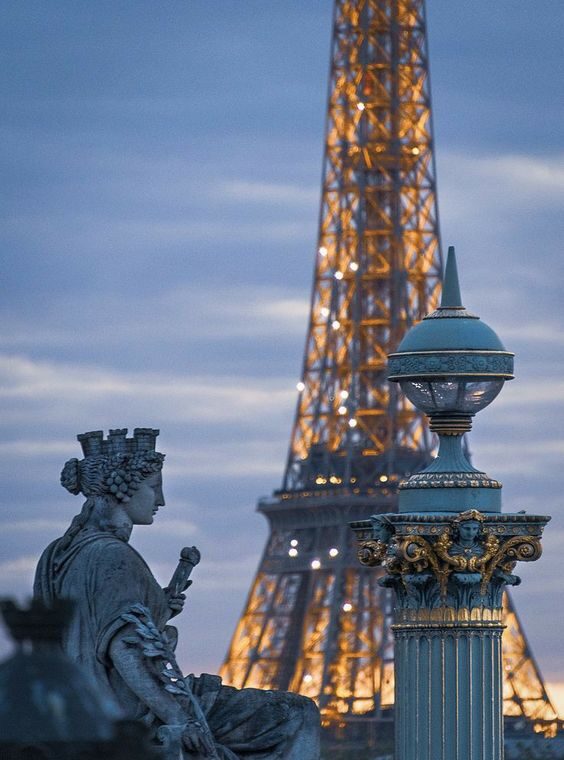
Discover the Eiffel Tower on a journey to the clouds like none other in the world. Eiffel Tower,wrought-iron structure in Paris that is among the most famous landmarks in the world. which was built on (1887–89) by Gustave Eiffel and named in his honor. Eiffel Tower was built to celebrate the centenary of the french revolution. And it was opened to the public on May 15, 1889. The tower features a museum, several restaurants,like.Jules verne etc… Whether day or night The Eiffel Tower is open every day of the year from 9:30 AM to 10:45 PM. Weekends and holidays are the busiest days.. At nightfall, it lights up and sparks every hour until closing time till. It consists of 3 floors, first floor, the second floor, and the top. You can reach the top by (elavator/stairs).
The Arc de Triomphe in Paris is a massive triumphal arch commissioned by Napoleon I in 1806 to celebrate the French armies’ military achievements, particularly the Battle of Austerlitz. Designed by architect Jean-François-Thérèse Chalgrin. The arch stands at the western end of the Champs-Élysées, honoring those who fought and died for France in the French Revolutionary and Napoleonic Wars. Beneath its vault lies the Tomb of the Unknown Soldier from World War I. Its iconic design of the ront pont which connects 12 roads indicating 12 directions and named after The Marshal’s and historical significance make it one of the world’s best-known monuments.

Opera has a rich history with many iconic works that continue to captivate audiences. With more than 350 years of history, the Paris Opera is renowned for its qualitative and wide programming, both at the Palais Garnier and the Bastille Opera House, but also for the unique architecture of its two theaters open to visitors during the day. With more than 400 curtain raises per year, the Paris Opera offers rich ballet, opera, and concert programs, as well as programming specially made for a younger audience. Greeting new audiences remains at the heart of the Paris Opera’s mission. To do so, the institution is always developing new projects to share and better communicate the taste and discovery of opera and dance.

Place de la Concorde, also known as “Place Louis XV,” holds a dark historical significance. During the French Revolution, it became the site of public executions, particularly during the Reign of Terror. The square witnessed the execution of Marie Antoinette, the queen consort of Louis XVI, on October 16, 1793. A symbol of revolutionary justice. Over 1,300 people were executed at Place de la Concorde during this wild period. The guillotine, initially presented as a humane machine, transformed into a government tool during the Terror. Nearly 38,000 to 43,000 guillotined individuals during the revolutionary era. Now it has became a touristic site for the public.

The Grande Arche de la Défense,is a monumental building located in the west of Paris. It is also called the business district because it contains number of great companies and hotels it was completed in 1989. It is about 110-meter-high made of prestressed concrete and covered in Bethel Granite.  Originally named La Grande Arche .

The Panthéon, originally known as the Church of Sainte-Geneviève, was designed by architect Jacques-Germain Soufflot and construction began around 1757. The Pantheon is a must-see when you visit Paris, both because of the imposing architecture and, finally, with respect to the people that made France and the world a better place. Its massive concrete dome, the largest unreinforced dome in the world, remains a mystery for architects and engineers even today. It replaced an older church on the same site. During the French Revolution, it was secularized and dedicated to the memory of great French figures, earning its name “Panthéon”.

Place Vendôme was built on the orders of Louis XIV, is a square in the heart of Paris. Its architecture, designed by Jules Hardouin-Mansart in 1699 created to celebrate the military victories of Louis XIV, it quickly became a symbol of luxury and power. The central Vendôme Column, erected by Napoleon I to commemorate the Battle of Austerlitz, remains a prominent feature on the square. Today, it stands as one of Paris’s most famous and luxurious squares, closely associated with high-end jewelry and fashion. The world’s great jewelry brands have turned Place Vendôme and the adjoining Rue de la Paix into one continuous stream of window displays filled with sparkling diamonds, rubies, and emeralds.

The Père Lachaise cemetery takes its name from King Louis XIV’s confessor, Father François d’Aix de La Chaise. It is the most prestigious and most visited in Paris. Situated in the 20th arrondissement of Paris. It serves as the final resting place for numerous notable individuals like Oscar Wild, Richard Wright, Colonel Fabien etc…
The Luxemberg garden was created in 1612 by Queen Marie de Médicis, who purchased the Hôtel du Luxembourg and its land to build a royal residence there The garden, inspired by the Boboli Gardens in Florence, has undergone numerous transformations over the centuries. Its current layout was established during the Second Empire. The gardens feature prominently in Victor Hugo’s novel Les Misérables. , it spans approximately 23 hectares and features French and English gardens, an orangery, a large octagonal basin, statues, greenhouses, beehives, and an orchard trees and gardens galore, but there are also sports opportunities, statues, a pond to rent mini boats for the kids, and a palace that sits next to the garden.

The Jardin des Tuileries,which was built in 1564 by Queen Catherine de Medici is a Parisian enclosed park. Extension of the Louvre museum. The famous gardener of the king, André Le Nôtre, gave it its current appearance as a French garden in 1664. The Musée national de l’Orangerie (officially “public establishment of the Musée d’Orsay and the Musée de l’Orangerie – Valéry-Giscard d’Estaing  ” since 2021) is a French museum of impressionist and post-impressionist paintings , located in the Jardin des Tuileries , at the western end of the Terrasse du bord de la Seine , place de la Concorde , in Paris.


For any inquiries or bookings, please contact our team.